The Thinking Tax: Why OpenAI o1 Changes Your Workflow
The end of instant gratification
We have spent the last two years training ourselves to expect immediate, snappy responses from our AI tools. We treat them like search engines, demanding a result in milliseconds. OpenAI o1 breaks this habit by design. It forces a pause. It spends time thinking before it speaks. This is not a bug. It is the entire point.
The shift from speed to depth
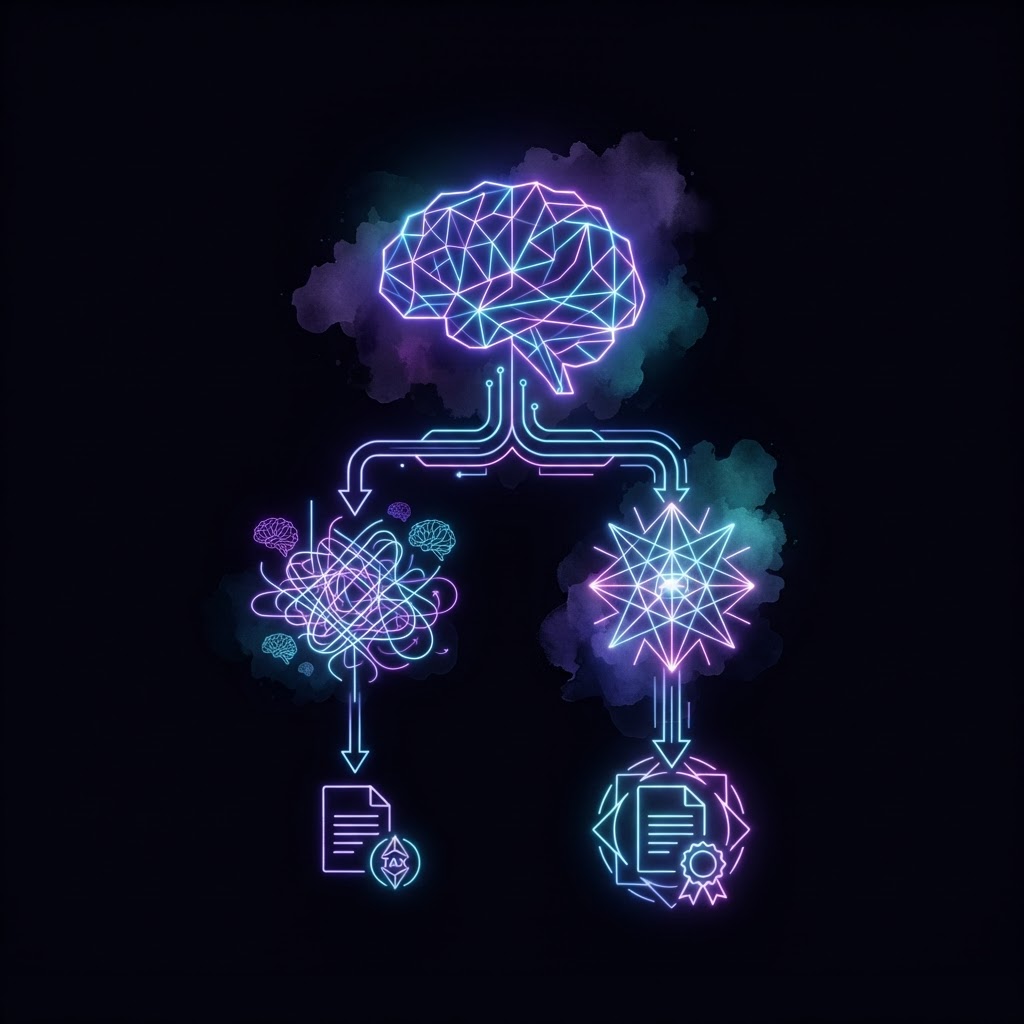
Most models are glorified autocomplete engines. They predict the next token based on probability. They are fast, they are cheap, and they are often wrong when the logic gets heavy. The o1 series uses a chain of thought process to verify its own logic. It backtracks, it checks for errors, and it iterates on its own internal monologue before it gives you an answer.
- The Planning Phase: The model breaks down complex problems into smaller, manageable steps.
- The Verification Phase: It evaluates its own approach and identifies potential pitfalls.
- The Execution Phase: It synthesizes the best path into a final, high-fidelity output.
When to ignore the hype
Do not use this for everything. If you are building a customer service chatbot or a real-time interface, o1 is the wrong tool. The latency is a feature for complex problem solving, not for conversational flow. You are paying a tax in time and compute for the sake of accuracy. If your task does not require deep reasoning, you are wasting your budget.
- Use GPT-4o for: Real-time interactions, simple summarization, and high-speed tasks.
- Use o1 for: Complex coding architecture, mathematical proofs, and multi-step strategic planning.
What this means for leaders
Stop asking your team to use the latest model for every single task. You are currently paying for reasoning power you do not need. Start categorizing your AI workflows by the depth of logic required.
If the task is routine, keep it fast and cheap. If the task is high-stakes, move it to a reasoning model. The competitive advantage will not go to the company that uses the most AI.
It will go to the company that knows exactly which model to deploy for the specific problem at hand. Stop treating AI as a monolith. Start treating it as a specialized workforce.
The Enterprise & Public Sector AI Integration Playbook
No spam. One email with the asset, then occasional Spark updates.