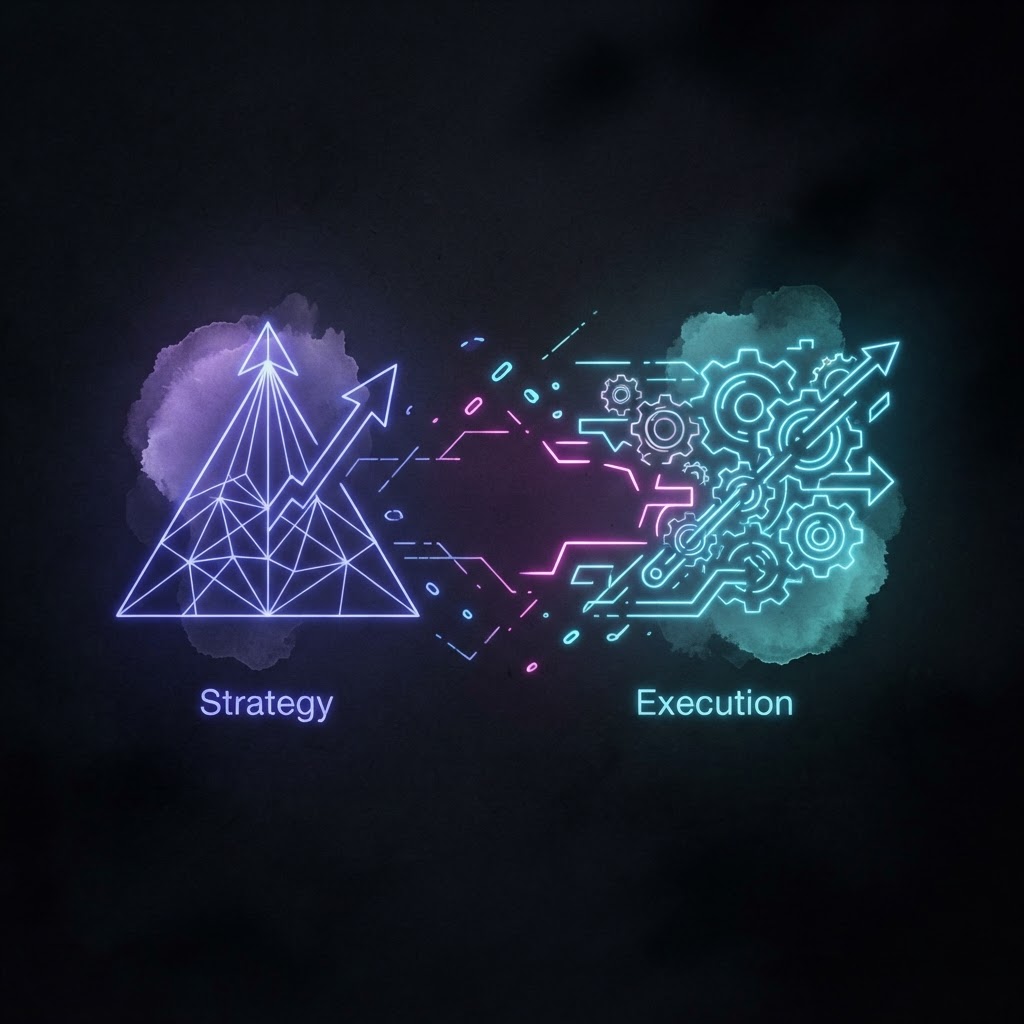
Most executive suites do not lack vision, ambition, or elegant slides. They lack a reliable mechanism to translate high-altitude intent into everyday operational velocity. Strategic planning sessions consistently generate crisp priorities, yet by the time those directives travel through functional silos, resource allocation hurdles, and misaligned incentives, front-line teams continue optimizing for business-as-usual routines.
This gap widens during major technological inflection points like artificial intelligence adoption. Organizations announce grand transformative goals, but middle managers and technical leads struggle without unified governance, iterative operational feedback loops, or clear ownership rights. Closing this divide requires moving beyond annual planning rituals toward real-time telemetry, continuous alignment rhythms, and explicit operating principles that make trade-offs immediately obvious to everyday practitioners.
Modern executives bridge the gap by integrating diagnostic roadmaps into weekly team workflows rather than keeping strategy isolated inside offsite presentations. By tying core capital and talent allocations directly to transparent execution milestones, leadership ensures strategic intent translates cleanly into measurable enterprise performance.
What this means for leaders
- Anchor intent to workflows: Ensure strategic priorities map directly to daily departmental operational goals and measurable milestones.
- Establish dynamic review cadences: Move from rigid annual reviews to frequent check-ins that evaluate execution momentum in real time.
- Clarify trade-off authority: Empower operational leaders with clear guidelines on which activities to prioritize when capacity constraints emerge.
My personal note
Great strategy feels calm and actionable on the factory floor, inside the customer service pod, or within the engineering sprint. Strategy flourishes when you focus on clarifying the practical steps of implementation, inviting teams into the journey and equipping them with the context required to succeed.
Industry case01
Scaling autonomous logistics under boardroom pressure
Logistics & Supply Chain · COO
“Your fleet modernization strategy looks immaculate on paper,” the board director said, leaning forward. “So why are regional hub dispatchers still routing 40% of shipments manually?” That question cut through months of optimistic executive summaries. The executive leadership had decreed a transition toward algorithmic dispatch, yet regional teams lacked direct API integrations with customer inventory databases, prompting dispatchers to revert to local spreadsheets. The COO halted new slide updates, paired regional fleet leads directly with systems architects, and redefined success around weekly automated order volume rather than theoretical milestone rollouts. Within two quarters, autonomous routing adoption surpassed 85%.
Takeaway: Translate enterprise strategic objectives into the practical day-to-day tooling and incentives of operational frontline teams.
Executive perspective02
The interrogation over stalled omnichannel expansion
Retail & E-commerce · CPO
“How many times do we have to reiterate that unified customer profiles are our top priority?” the Chief Product Officer asked during the quarterly operations review. “Every week,” the platform engineering director replied calmly. “And every week our sprint capacity is assigned to patching warehouse inventory discrepancies because our legacy systems are overwhelmed.” That sharp exchange exposed the core reality: strategic goals were competing with operational maintenance without explicit guidance on prioritization. The CPO responded by ring-fencing 35% of all technical capacity solely for unified profile architecture, giving the team formal permission to de-escalate lower-tier legacy bug backlogs.
Takeaway: Provide teams with protected capacity and explicit trade-off rules rather than expecting strategic progress on top of full-time operational maintenance.
Before and after03
Restructuring capital planning to reflect product ambitions
Financial Services · Head of PMO
Annual strategic planning traditionally culminated in an elaborate multi-tiered approval hierarchy where business goals were separated from technical budget cycles. As a result, strategic initiatives routinely waited nine months for funding clearance while market dynamics shifted. The enterprise transformed this dynamic by instituting dynamic quarterly capital allocation tranches managed by an integrated PMO and finance council. Teams pitched progress against strategic benchmarks every 90 days to receive incremental project funding. Delivery timelines shortened by half, and strategic programs gained the agility needed to respond to interest rate shifts.
Takeaway: Align capital release mechanisms directly with continuous execution milestones rather than rigid annual budget approvals.
Cautionary tale04
The risk of disconnected digital transformation
Healthcare Systems · Chief Strategy Officer
“We spent eighteen months drafting the enterprise digital care roadmap,” the Chief Strategy Officer reflected during an executive post-implementation review. “We secured vendor contracts, built brand collateral, and held an all-hands kickoff.” Yet six months after rollout, patient engagement metrics barely budged. Clinical nurses and administrative staff found the new software added eight minutes of extra input fields per intake, leading them to quietly route patients through legacy paper intake forms to maintain clinic schedules. Because operational usability had been omitted from the strategic plan, substantial capital delivered virtually zero clinical impact. The leadership team had to pause expansion and redesign workflows alongside nursing staff.
Takeaway: Engage primary end users early when designing strategic transformations to ensure new workflows enhance rather than hinder operational momentum.